
Tack Welding Control in High Purity Stainless Steel Pipe Systems
Internal Cleanliness and Weld Appearance in Controlled Fabrication Processes
In high-purity gas delivery systems used across semiconductor and pharmaceutical manufacturing, internal surface quality is not determined solely by the final orbital weld. Contamination and oxidation can begin at the earliest stages of fabrication — including tack welding.
Tack Welding as a Structural and Alignment Step
Tack welding is used to temporarily fix pipe alignment before final orbital welding.
Its purpose is purely functional: maintaining correct geometry and ensuring stability during subsequent welding operations.
Although it is a small welding step, its influence on internal surface condition is important in high purity environments.
External Appearance After Tack Welding
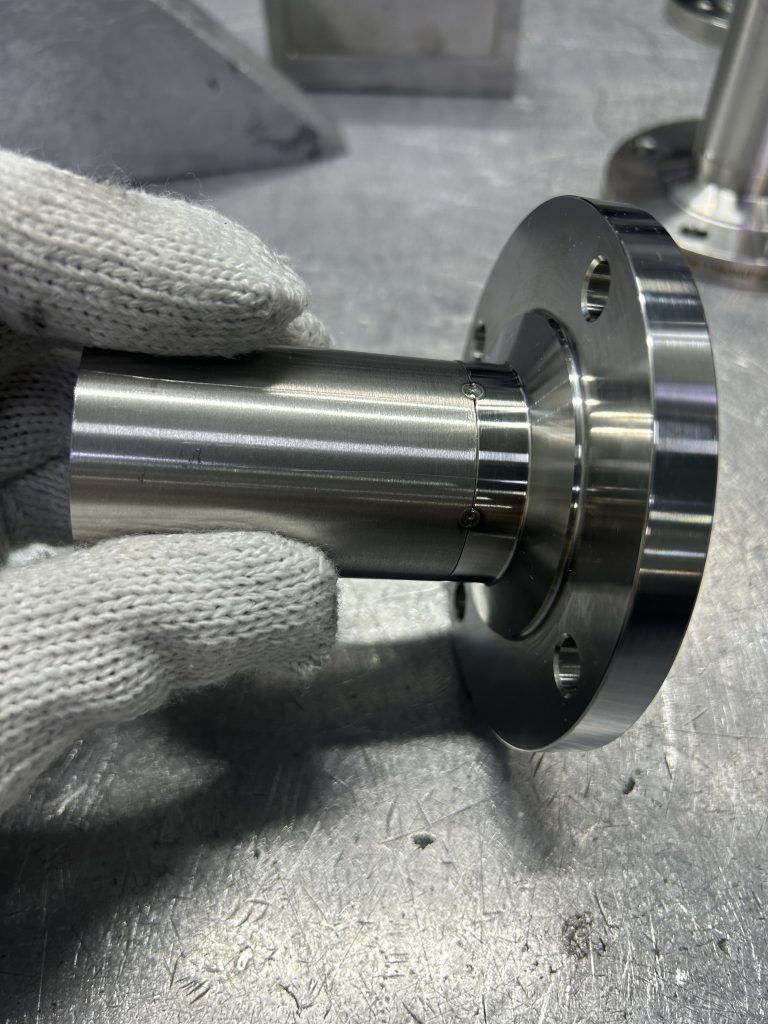
Figure 1 :
This image shows the external appearance of a stainless steel pipe after tack welding.
The localized weld points are used to maintain alignment before final orbital welding. The external surface shows controlled fusion areas typical of fabrication setup operations.
This stage is part of controlled workshop welding processes where dimensional accuracy is maintained before final welding is performed.
Internal Surface Condition After Tack Welding
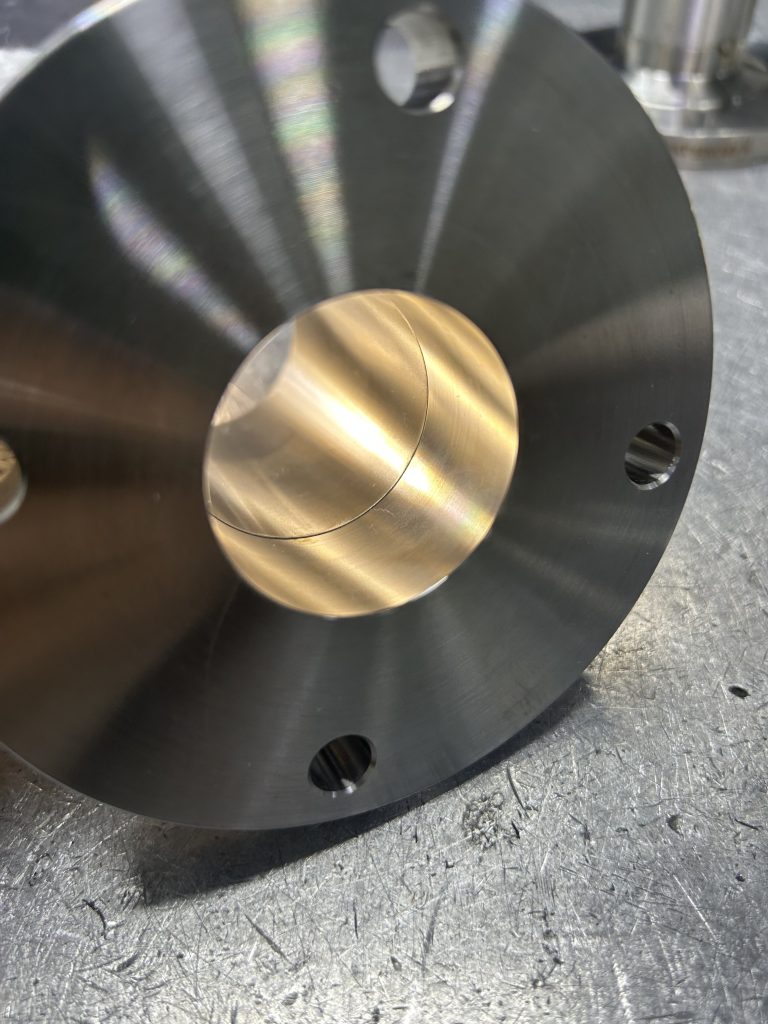
Figure 2 Description:
This image shows the internal surface condition of the pipe after tack welding, viewed from inside the tube.
The weld area shows no visible oxidation color or heat tint, indicating that the internal environment remained protected during the welding process..
For thin-wall (1.5 mm) 316L stainless steel tubing, typical tack welding parameters used in controlled UHP fabrication include:
| Parameter | Typical Value | Purpose |
|---|---|---|
| Welding Current | 78 A | Localized fusion with minimal heat input |
| Downslope Time | 0.16s | Prevents crater cracking at tack point |
| Tungsten Stick-Out | 10 mm | Maintains arc visibility and gas coverage |
| Gas Nozzle Size | #10 | Ensures stable laminar shielding gas flow |
| Purge Gas | Argon ≥ 99.999% | Oxygen level controlled below 10 ppm |
After tack welding and before final orbital welding, the following cleaning steps should be completed:
1. Wipe the tack points, heat-affected zone, and adjacent tube surface with electronics-grade isopropyl alcohol (IPA)
2. Use only lint-free wipes to avoid fiber contamination
3. Visually inspect the cleaned area for any discoloration, spatter, or particulate residue
4. If any oxidation is visible, the tack point should be ground out and re-tacked under proper purge conditions
This step removes microscopic spatter, airborne dust, and minor surface oxides that may have formed during the tack weld, ensuring the joint is in a pristine state before final fusion.
This type of inspection is commonly used to verify that internal surface condition remains suitable for subsequent orbital welding operations.
What This Indicates in High Purity Applications
In high cleanliness piping systems, the key concern is not only weld strength, but internal surface condition.
Based on the inspection shown above:
- Internal oxidation is not visually present
- Surface condition remains stable after tack welding
- Weld preparation stage is properly controlled
- Pipe is suitable for subsequent orbital welding processes
These factors are important in systems where internal contamination must be minimized.
Weld Process Consistency in Controlled Fabrication
During fabrication, welding operations are performed under controlled conditions to maintain repeatability and consistency.
Key considerations include:
- Controlled internal shielding gas protection
- Pre-cleaning of stainless steel tubing surfaces
- Controlled heat input during tack welding
- Stable alignment before orbital welding
These factors help maintain consistent internal surface quality across production batches.
Application Areas
These types of piping systems are commonly used in:
- Semiconductor gas distribution systems
- Pharmaceutical cleanroom piping
- Food-grade stainless steel process lines
- High-purity gas and fluid delivery systems
In these environments, internal surface condition directly affects system performance and reliability.
WeldPure specializes in high-purity stainless steel piping for semiconductor, pharmaceutical, and food-grade applications — from precision welding to complete system fabrication, with full process control and documentation.
Conclusion
Tack welding is a small but important step in maintaining alignment and internal quality during stainless steel pipe fabrication.
The inspection results shown in the images demonstrate controlled welding conditions and stable internal surface behavior, which are essential for high purity applications.
For systems requiring consistent weld quality and internal cleanliness, controlled fabrication processes are critical from the earliest welding stages.