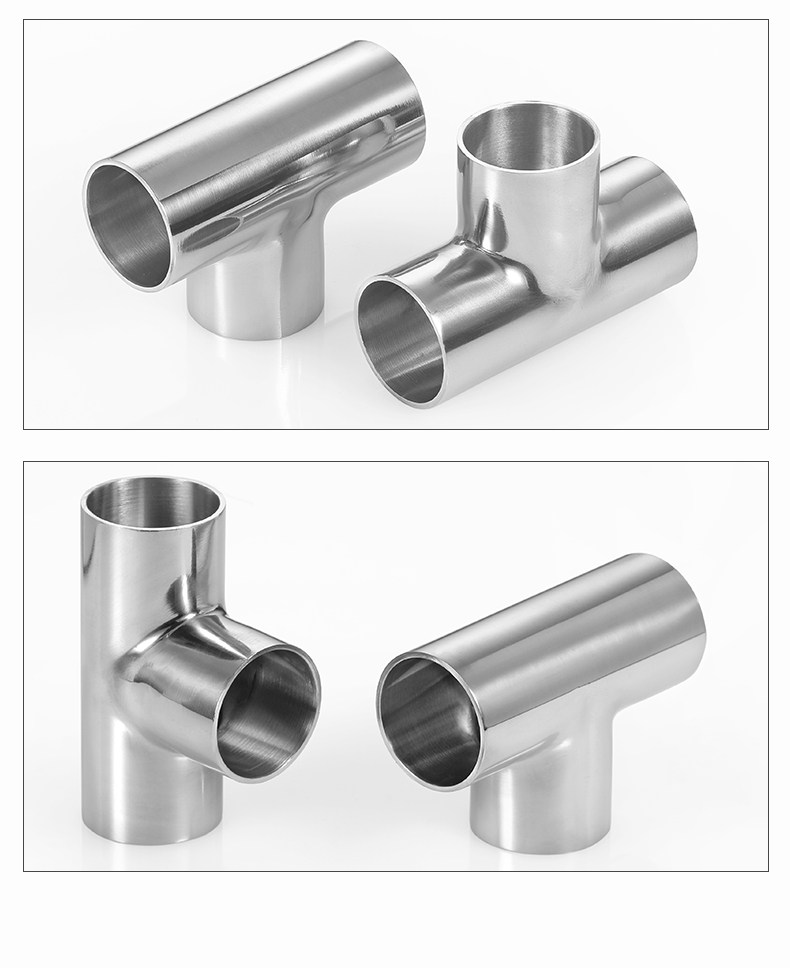
Sanitary jacketed fittings are used in piping systems where temperature control is required to maintain a process fluid within a suitable operating range. Common applications include dairy processing, food and beverage production, brewing, pharmaceutical manufacturing, and cosmetics processing.
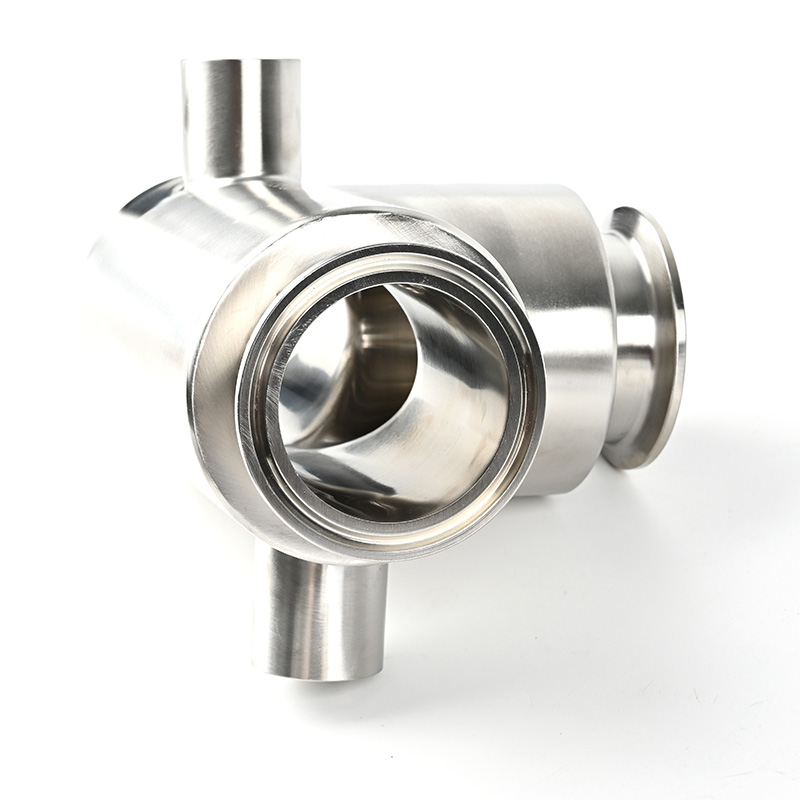
Unlike a standard sanitary fitting, a jacketed fitting contains two functional sections: the inner process passage, which carries the product, and the outer jacket, which accommodates a heating or cooling medium.
When sourcing custom sanitary jacketed fittings, specifying only the nominal pipe size and material is rarely enough. The process side and jacket side have different functions, connection requirements, and operating conditions. Both need to be defined before a supplier can assess the design and prepare an accurate quotation.
This guide explains the key information to include in a request for quotation (RFQ), from material and dimensions to connections, operating conditions, testing, and documentation.
1. Define the Process-Side Requirements
The process side is the inner passage that carries the product. Its dimensions, material, surface finish, and connections should be compatible with the existing sanitary piping system and the process requirements.
Material
The most common material options for custom sanitary jacketed fittings include:
- 304 stainless steel: Used in many general food, beverage, and industrial applications where its corrosion resistance is suitable for the service conditions.
- 316L stainless steel: Often selected for applications requiring improved corrosion resistance, including many pharmaceutical and hygienic processing systems.
Material selection should account for the process medium, cleaning chemicals, operating temperature, and applicable project requirements. Neither grade should be treated as universally suitable for every application.
Tube Size and Wall Thickness
Specify the process-side tube outside diameter (OD), wall thickness, and dimensional standard where applicable.
Common sanitary tube sizes include 1″, 1.5″, 2″, 2.5″, 3″, 4″, 5″, and 6″. Metric sizes or other dimensions can also be considered for custom requirements.
Do not assume that nominal pipe size, sanitary tube OD, and DN designation are interchangeable. Confirm the actual dimensions and connection standard, particularly when a custom fitting must connect to existing equipment or prefabricated pipework.
Typical wall thicknesses may include 1.5 mm, 1.65 mm, and 2.0 mm, depending on the tube size and design. The final selection should be checked against the intended operating conditions and the fitting configuration.
Connection Type
Identify the connection required at each end of the process side. Depending on the system, this may include:
- Sanitary clamp connections
- Butt-weld ends
- Other specified sanitary or custom connections
For clamp connections, provide the applicable standard and dimensions rather than relying on nominal size alone. For welded ends, confirm the tube OD, wall thickness, and fit-up requirements.
If the two ends require different connections, list them separately in the drawing or RFQ.
Surface Finish
Surface finish requirements should be based on the product-contact application and the project’s hygienic requirements.
Common options include fine-polished and mirror-polished surfaces. However, appearance alone does not establish a specific internal roughness value.
If a maximum surface roughness is required, state the target Ra value and clarify whether it applies to the internal process-contact surface, the external surface, or both. Also specify whether mechanical polishing, electropolishing, or another finishing process is required.
Electropolishing should not be assumed to be included unless it is explicitly specified and confirmed.
2. Specify the Jacket-Side Requirements Separately
The outer jacket provides a separate passage for the heating or cooling medium. Its configuration depends on the required temperature-control function and the available installation space.
A complete RFQ should describe the jacket independently from the process side.
Heating or Cooling Medium
Identify the intended medium, such as hot water, steam, or a suitable cooling fluid. The choice affects the design requirements and should be considered alongside the operating temperature and pressure.
Where relevant, provide the medium’s operating conditions and any project-specific requirements for material compatibility.
Jacket Connections
Specify the jacket inlet and outlet locations, connection sizes, and connection types.
The required arrangement may depend on the piping layout, flow direction, installation orientation, and available clearance. A drawing is especially useful when the inlet and outlet positions must match existing equipment or pipework.
Jacket Coverage and Geometry
Clarify which section of the fitting requires temperature control and how the jacket should be arranged around it.
Important details may include:
- Jacketed length and coverage
- Overall fitting length
- Process-side bend or branch geometry
- Jacket inlet and outlet positions
- Installation orientation and clearance
- Connection dimensions at both ends
A standard sanitary elbow or tee may not provide the geometry needed for a particular jacket arrangement. For non-standard configurations, a dimensioned drawing or sample can help establish the intended design.
Operating and Design Conditions
Distinguish between operating conditions and design conditions.
Operating conditions describe the temperatures and pressures normally encountered during use. Design conditions establish the limits the component must be designed to accommodate.
Provide the relevant temperature and pressure requirements for both the process side and the jacket side. If steam, thermal cycling, cleaning cycles, or other demanding conditions are involved, include them in the specification.
The process side and jacket side should not automatically be assigned the same pressure rating or test requirements. Each side must be assessed according to its own design and service conditions.
3. Confirm Dimensions and Design Details Before Quotation
For custom jacketed fittings, the connection interfaces and overall geometry are often as important as the material selection.
A supplier may need to clarify several details before confirming feasibility and price:
| Specification | Information to Provide |
|---|---|
| Process-side size | Tube OD, wall thickness, and applicable standard |
| Process-side material | 304 or 316L stainless steel, or another specified grade |
| End connections | Type, size, and standard for each end |
| Jacket-side connections | Inlet/outlet size, type, and location |
| Jacket coverage | Required length and section to be jacketed |
| Overall dimensions | Total length, height, bend radius, and relevant clearances |
| Surface finish | Finish type and any required Ra value |
| Operating conditions | Normal process and jacket temperatures and pressures |
| Design conditions | Required design temperature and pressure for each side |
| Quantity | Prototype, small batch, or production quantity |
Not every project requires every field to be specified in the initial enquiry. However, missing dimensions or unclear connection standards can lead to additional clarification, revised quotations, or an unsuitable component.
When an existing fitting must be replaced, a part drawing, equipment reference, sample, or clear photographs with measured dimensions can be useful starting points.
4. Define Testing Requirements for Each Side
Testing requirements should be agreed upon before production rather than assumed from the product description.
For many sanitary jacketed fittings, hydrostatic pressure testing may be appropriate when the project requires verification of pressure integrity. Whether testing is necessary, and how it should be performed, depends on the design, applicable requirements, and customer specification.
The RFQ should clarify:
- Whether pressure testing is required
- Whether the process side, jacket side, or both must be tested
- The specified test pressure and holding time
- The acceptance criteria
- Whether test records or reports are required
The test pressure should be determined from the applicable design requirements and agreed procedure. It should not be selected simply by applying an arbitrary multiple of the operating pressure.
Helium mass spectrometer leak testing is a different test method and should not be treated as a standard requirement for every sanitary jacketed fitting. It may be considered when a project has a specific leak-tightness requirement that justifies this method.
If hydrostatic testing is available on request rather than included in every order, state this clearly in the quotation and confirm the scope before production.
5. Clarify Surface Inspection and Documentation
Testing is only one part of order acceptance. Depending on the application, the buyer may also require dimensional checks, material documentation, surface inspection, or records related to fabrication and testing.
Possible requirements include:
- Dimensional inspection
- Visual inspection of accessible surfaces and welds
- Material certificates, where required and available
- Pressure-test records, when testing is specified
- Inspection or acceptance criteria defined by the project
For pharmaceutical or other demanding hygienic applications, the documentation package should be agreed upon at the quotation stage. Requirements should not be assumed to be included simply because the fitting is described as sanitary or made from 316L stainless steel.
The required records should match the actual scope of supply and the customer’s acceptance criteria.
6. What to Include in a Custom RFQ
A useful RFQ does not need to be complicated. It needs to give the supplier enough information to understand the two sides of the fitting and identify any unresolved design details.
For a straightforward enquiry, provide the following:
- Material: 304 or 316L stainless steel.
- Process-side dimensions: Tube OD, wall thickness, and connection standard.
- Jacket-side details: Medium, connection sizes, inlet/outlet positions, and jacket coverage.
- Operating and design conditions: Temperature and pressure for both sides.
- Surface finish: Required finish and any specified roughness value.
- Quantity: Expected order quantity and whether a prototype is needed.
- Testing and documentation: Required pressure tests, acceptance criteria, and records.
- Drawing or reference: A dimensioned drawing, sketch, sample, or equipment interface details.
If some parameters have not yet been determined, identify them as open items rather than leaving them ambiguous. A preliminary drawing or technical discussion can help establish what needs to be confirmed before the design is finalized.
7. Custom Sanitary Jacketed Fittings from WeldPure
WeldPure supports sourcing and production coordination for custom stainless steel sanitary fittings and piping components. Requirements can be reviewed against the specified dimensions, materials, connection interfaces, jacket configuration, testing scope, and documentation needs.
Available configurations may include jacketed elbows, tees, straight sections, and other custom geometries, subject to design review and production feasibility.
For a quotation, please provide the following where available:
- Material and process-side tube dimensions
- Jacket dimensions and connection requirements
- A drawing, sketch, sample, or reference photographs
- Operating and design conditions
- Surface finish and testing requirements
- Required quantity and delivery expectations
If the final design is not yet available, an initial enquiry with the known dimensions and application details is still a useful starting point.
Contact WeldPure to discuss your custom sanitary jacketed fitting requirements. Clear specifications for both the process side and the jacket side help establish feasibility, clarify testing expectations, and reduce avoidable revisions during quotation and production coordination.
Custom Sanitary Jacketed Pipe Fittings | 316L Stainless Steel